Stud Finders
Best Budget Stud Finder
A value-focused guide to magnetic and electronic stud finders, organized by price tier for drywall, plaster, and common DIY projects.

The RenterSmartHome Research Team, Research desk
Reviews analyzed 23,900 · 18 sources
As an Amazon Associate we earn from qualifying purchases. Affiliate disclosure

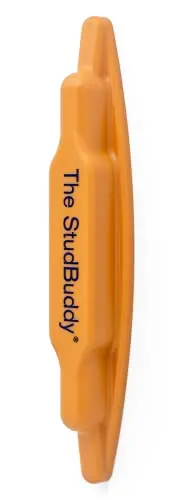
The Original StudBuddy Magnetic Stud Finder is our top choice for the best budget stud finder because it delivers the core job at about $10: finding drywall fasteners without batteries, calibration, or extra features that increase cost.
Budget stud finders split into two groups. Magnetic models use wall fasteners as their signal, while electronic scanners detect changes behind the surface and can add features like wire warnings and multiple scan modes. The right choice depends on your walls and the projects you plan to complete.
We ranked these picks by value tiers. The magnetic options lead for simple drywall work, the Zircon MultiScanner A200 adds electronic features around $40, and the Franklin Sensors ProSensor M210 is the price ceiling option for buyers willing to spend more.
Our pick
StudBuddy Magnetic Stud Finder
The StudBuddy is the best value for basic drywall projects because it finds screws quickly without batteries or calibration.
Not for: Old plaster walls, projects needing live wire warnings, or users who want direct stud center detection.
Upgrade pick
Franklin Sensors ProSensor M210
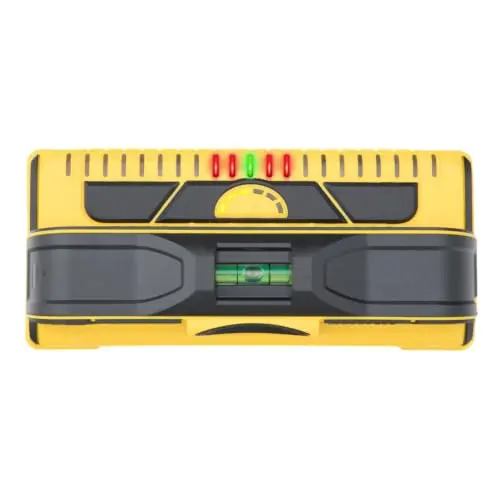
The M210 is the price ceiling choice for buyers who want a more advanced scanner and accept a roughly $60 budget.
Not for: Strict under-$20 budgets or users who only need a simple magnetic finder.
Our pick
StudBuddy Magnetic Stud Finder
Verdict. The StudBuddy is the best value for basic drywall projects because it finds screws quickly without batteries or calibration.
Not for: Old plaster walls, projects needing live wire warnings, or users who want direct stud center detection.
Pros
- No batteries or calibration make it ready whenever needed / Strong magnets can hold onto drywall screws as a hands-free marker / Buyers report fast stud locating with an S-pattern sweep / The low price and USA manufacturing are frequently praised
Cons
- It does not work well on lath and plaster walls / It finds fastener heads, not the wood stud itself / It can stick to unwanted metal items in a toolbox / It is slower than electronic scanners for large walls
- Detection technology
- neodymium magnets locate drywall screws and nail heads
- Battery
- none required
- Calibration
- none required
- Length
- 6 inches
- Weight
- 1.6 ounces
- Model
- 001
- Base
- scratch-free plastic
- Wall compatibility
- not intended for lath and plaster walls

Also worth a look
StudPoP Original Smart Magnetic Stud Finder
Verdict. The StudPoP is a low-cost alternative that makes sense when you want a magnetic finder with a visible signal.
Not for: Buyers who need a large grip, built-in marking tools, or a finder that identifies stud centers directly.
Pros
- The click and pop signal helps users confirm fastener locations / Buyers report success on thicker and more challenging wall materials / No batteries or calibration keep operation simple / The low price appeals to DIY users
Cons
- Its small size makes it easy to lose / Some users find the magnetic pull weaker than expected / It does not provide leveling or marking features / It may not hang on walls as securely as larger magnetic models
- Detection
- moving magnet with audible click and visual pop
- Battery
- none required
- Calibration
- none required
- Wall types
- drywall, plaster, lath, tile, double sheetrock, wood and metal studs
- Size
- 1.5 inches round
- Weight
- 1.12 ounces
- Material
- ABS
Also worth a look
CH Hanson 3040 Magnetic Stud Finder
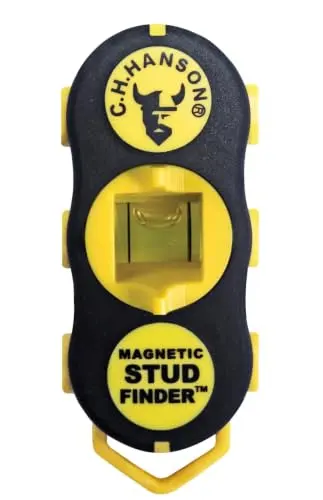
Verdict. The CH Hanson 3040 is the best budget magnetic upgrade if you want a built-in level and easier marking.
Not for: Large renovation projects, thick plaster, or users needing electrical hazard detection.
Pros
- Buyers praise the strong magnet and hands-free wall hold / The built-in level helps with mounting tasks / Three marking points simplify layout work / Reviewers like the compact pocket-friendly design
Cons
- Thick plaster and extra wall layers can reduce performance / Some users expected it to locate wood directly / It has no live wire detection / Full-wall scanning takes longer than electronic tools
- Detection
- rare earth magnets locate screws, nails, and steel studs
- Battery
- none required
- Level
- built-in rotating bubble vial
- Anchor points
- three on each side for marking
- Scan depth
- up to 3/4 inch wall thickness
- Model
- 3040
- Dimensions
- 4-1/2 inch body
Also worth a look
Zircon MultiScanner A200
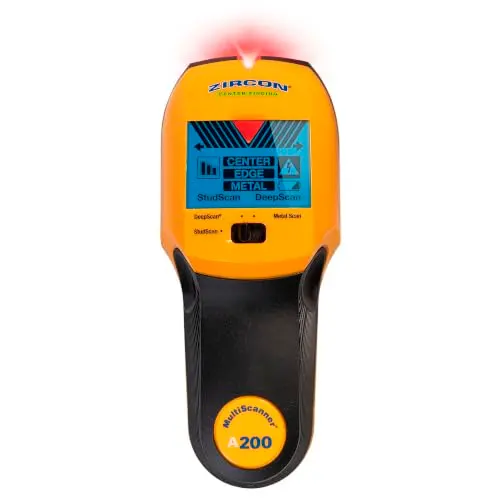
Verdict. The Zircon A200 is the best value choice for buyers who want electronic scanning features without moving to premium pricing.
Not for: Buyers who only need simple drywall fastener detection or those working through very thick materials.
Pros
- Multiple modes cover studs, metals, and some wiring detection / Buyers like the LCD, pointer, and signal strength display / Auto Correcting Technology helps with common scanning mistakes / Metal Scan adds usefulness for plumbing and renovation projects
Cons
- The 9V battery adds ongoing cost / Some reviewers report false readings / Calibration can be sensitive on uneven surfaces / The depth range is limited for very thick walls
- Modes
- StudScan, DeepScan, and Metal Scan
- StudScan depth
- up to 3/4 inch
- DeepScan depth
- up to 1.5 inches
- Live wire warning
- detects live AC wires up to 2 inches deep
- Display
- backlit LCD with SpotLite pointer
- Battery
- one 9V battery, not included
- Warranty
- limited lifetime
Upgrade pick
Franklin Sensors ProSensor M210
Verdict. The M210 is the price ceiling choice for buyers who want a more advanced scanner and accept a roughly $60 budget.
Not for: Strict under-$20 budgets or users who only need a simple magnetic finder.
Pros
- Buyers like seeing stud width and center through the LED display / No calibration makes operation straightforward / The built-in level and pencil caddy add convenience / Reviewers praise the clear center indication
Cons
- The larger body can be awkward in tight areas / The button must stay pressed during scanning / Surface conditions can cause false readings / It is the most expensive option in this guide
- Sensors
- 13 patented capacitive sensors
- LED display
- 21 LEDs
- Detection depth
- 1.7 inches through drywall
- Calibration
- none required
- Live wire warning
- live wire meter
- Level
- built-in bubble level
- Battery
- two AA batteries, not included
How we picked
We compared five stud finders across price tiers, from simple magnetic tools under $20 to electronic scanners around $40 and $60. We focused on value for price, detection method, ease of use, battery requirements, common installation tasks, and repeated buyer feedback. We did not hands-on test these products. See our How we research page.
Compare the picks
| Model | Best for | Display | Detection technology | Battery | Calibration | Length | Weight | Model | Base | Wall compatibility | Detection | Wall types | Size | Material | Level | Anchor points | Scan depth | Dimensions | Modes | StudScan depth | DeepScan depth | Live wire warning | Warranty | Sensors | LED display | Detection depth | Typical price |
|---|---|---|---|---|---|---|---|---|---|---|---|---|---|---|---|---|---|---|---|---|---|---|---|---|---|---|---|
| StudBuddy Magnetic Stud Finder | Our pick | n/a | neodymium magnets locate drywall screws and nail heads | none required | none required | 6 inches | 1.6 ounces | 001 | scratch-free plastic | not intended for lath and plaster walls | n/a | n/a | n/a | n/a | n/a | n/a | n/a | n/a | n/a | n/a | n/a | n/a | n/a | n/a | n/a | n/a | n/a |
| StudPoP Original Smart Magnetic Stud Finder | Also worth a look | n/a | n/a | none required | none required | n/a | 1.12 ounces | n/a | n/a | n/a | moving magnet with audible click and visual pop | drywall, plaster, lath, tile, double sheetrock, wood and metal studs | 1.5 inches round | ABS | n/a | n/a | n/a | n/a | n/a | n/a | n/a | n/a | n/a | n/a | n/a | n/a | n/a |
| CH Hanson 3040 Magnetic Stud Finder | Also worth a look | n/a | n/a | none required | n/a | n/a | n/a | 3040 | n/a | n/a | rare earth magnets locate screws, nails, and steel studs | n/a | n/a | n/a | built-in rotating bubble vial | three on each side for marking | up to 3/4 inch wall thickness | 4-1/2 inch body | n/a | n/a | n/a | n/a | n/a | n/a | n/a | n/a | n/a |
| Zircon MultiScanner A200 | Also worth a look | backlit LCD with SpotLite pointer | n/a | one 9V battery, not included | n/a | n/a | n/a | n/a | n/a | n/a | n/a | n/a | n/a | n/a | n/a | n/a | n/a | n/a | StudScan, DeepScan, and Metal Scan | up to 3/4 inch | up to 1.5 inches | detects live AC wires up to 2 inches deep | limited lifetime | n/a | n/a | n/a | n/a |
| Franklin Sensors ProSensor M210 | Upgrade pick | n/a | n/a | two AA batteries, not included | none required | n/a | n/a | n/a | n/a | n/a | n/a | n/a | n/a | n/a | built-in bubble level | n/a | n/a | n/a | n/a | n/a | n/a | live wire meter | n/a | 13 patented capacitive sensors | 21 LEDs | 1.7 inches through drywall | n/a |
Why choosing a budget stud finder is tricky
A budget stud finder can mean a simple magnet, a compact electronic scanner, or a feature-heavy tool at the upper end of the price range. The cheapest option may be enough for drywall shelves, while older walls and larger projects can justify added features. The main decision is whether you need fastener detection or broader scanning. Magnetic tools are simple and affordable, but they require you to infer the stud location from screws or nails. Electronic models add more information but introduce batteries, calibration, and potential false readings.
Type comparison: magnetic versus electronic stud finders
Magnetic stud finders use metal fasteners as the signal source, making them affordable and maintenance-free. Electronic stud finders detect changes behind the wall and can add features like displays, multiple modes, and wire warnings. Magnetic options are often enough for drywall installations. Electronic models are more useful when you need additional information before drilling or when wall conditions are less predictable.
What to avoid when buying a low-cost stud finder
Avoid choosing a tool without matching it to your wall type and project. A magnetic finder is not a direct wood detector, and a basic model may not work through thick plaster or unusual surfaces. Do not assume a low-cost scanner replaces safe drilling practices. Wire warnings can help, but they are not a guarantee that every hidden wire will be detected. For plaster walls, consider the tradeoffs before choosing.
How to choose the right stud finder for your project
Choose based on wall material, installation needs, and how often you will use the tool. Occasional drywall mounting usually favors a magnetic model, while frequent remodeling can justify an electronic scanner. Look at battery needs, weight, marking features, and detection limits. For deeper scanning needs, see our guide to the Best Stud Finder With Deep Scan. For older homes, our guide to the Best Stud Finder for Plaster Walls covers options designed around those challenges.
Common questions
What is the best budget stud finder for drywall?
The Original StudBuddy Magnetic Stud Finder is a strong choice for basic drywall because it costs about $10, needs no batteries, and quickly finds metal fasteners. It works best when you understand that it locates screws and nails, not the entire wood stud.
Are magnetic stud finders accurate enough for hanging shelves?
Magnetic stud finders can work well for many drywall projects because they locate the screws holding drywall to studs. Buyers report that careful sweeping helps identify the stud line, but these tools do not provide the same information as electronic scanners.
Can a cheap stud finder work on plaster walls?
Some low-cost models work better than others on plaster. The StudPoP has buyer reports of success on thicker materials, while the StudBuddy is specifically not intended for lath and plaster walls. Wall thickness and construction affect results.
Do electronic stud finders need calibration?
Some electronic models require calibration steps, but the Franklin M210 uses no calibration and the Zircon A200 includes Auto Correcting Technology. Buyers still report that surface conditions and batteries can affect electronic scanner performance.
What should I look for in a stud finder for mounting a TV?
For TV mounting, consider detection reliability, marking ability, and wall type. A magnetic model can locate fasteners, while electronic tools may provide additional information. Always account for the limits of the specific tool before drilling.
Is a more expensive stud finder worth it?
Spending more can make sense if you need extra features often. The Zircon A200 adds electronic modes around $40, while the Franklin M210 adds more advanced scanning features around $60. For occasional drywall tasks, cheaper magnetic models may provide better value.
Sources
- The Original StudBuddy Magnetic Stud Finder (shopabunda product page)
- The StudBuddy Magnetic Stud Finder (WoodArtSupply product page)
- The Original StudBuddy Magnetic Stud Finder (ubuy editorial review + rating snapshot)
- StudPoP B00FRI5TMY price history + ASIN confirmation (camelcamelcamel)
- StudPoP Original buyer reviews (desertcart mirror)
- StudPoP official reviews page (studpop.com)
- StudPoP Original UK buyer reviews (desertcart mirror)
- C.H. Hanson Stud 4 Sure Magnetic Stud Finder (Home Depot reviews)
- C.H. Hanson Stud 4 Sure Magnetic Stud Finder (Anderson Lumber specs)
- CH Hanson 3040 Magnetic Stud Finder (desertcart buyer reviews)
- Zircon MultiScanner A200 (desertcart feature + spec sheet)
- Zircon MultiScanner A200 buyer reviews (desertcart mirror)
- Zircon MultiScanner A200 review roundup (strongmocha)
- Zircon MultiScanner A200 (shopabunda review snapshot)
- Franklin Sensors M210 official comparison + FAQ (manufacturer)
- Franklin Sensors M210 official operating instructions PDF (franklinsensors.com)
- Franklin Sensors M210 review analysis (ratebud)
- Harbor Freight Franklin finders comparison (SlashGear, includes M210)
This guide uses AI-assisted analysis of buyer reviews, manufacturer specifications, and public sources on Reddit, YouTube, and expert sites. A person reviews every guide before it is published. We do not test these tools hands-on. As an Amazon Associate we earn from qualifying purchases. Affiliate disclosure · How we research