Stud Finders
Best Stud Finder for Plaster Walls
Plaster hides studs from most sensors. We compared five Amazon-verified stud finders to find which ones actually work through plaster and lath, and which one to avoid.

The Clearline Research Team, Research desk
Reviews analyzed 10,000 · 3 sources
As an Amazon Associate we earn from qualifying purchases. Affiliate disclosure
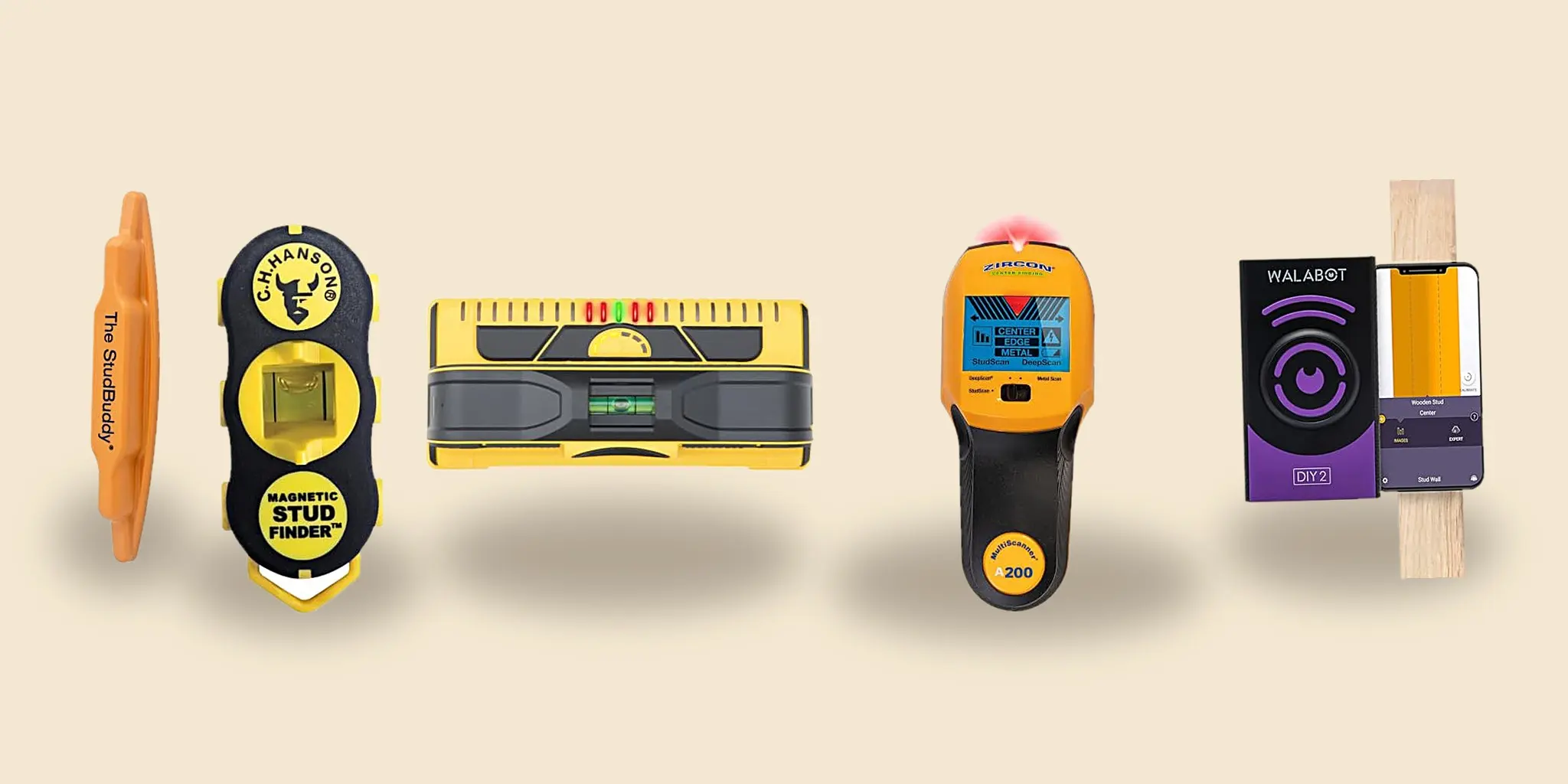
Finding a stud behind plaster is one of the most frustrating jobs in an older home. Standard electronic stud finders were designed for drywall, a thin, uniform surface. Plaster is thicker, denser, and often applied over wood lath or metal mesh, which confuses the sensors that work perfectly on modern walls.
We compared five Amazon-verified stud finders specifically for plaster walls, weighing buyer reviews, independent test results, and manufacturer specs. The short answer: the Franklin Sensors ProSensor M210 is the best electronic option thanks to its 13 sensors and 1.7-inch scan depth, while the StudBuddy magnetic finder is the $10 backup that works where electronics give up, as long as your walls don't use metal lath.
Below: our five picks with honest pros and cons, a plaster-specific buying guide, and answers to the questions plaster-wall owners ask most.
Our pick
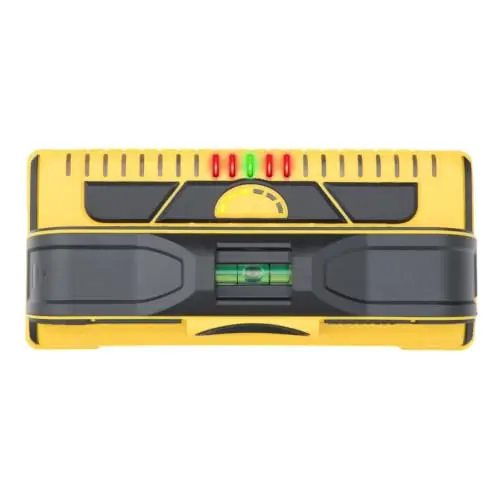
Franklin Sensors ProSensor M210
The most reliable electronic stud finder for plaster walls in our research. Its 13-sensor array and 1.7-inch depth handle standard plaster far better than single-sensor models, and buyers consistently report accurate center-and-edge readings with no calibration fuss. It is the best first choice for plaster.
Not for: metal lath. Nothing electronic is reliable there.
Budget pick
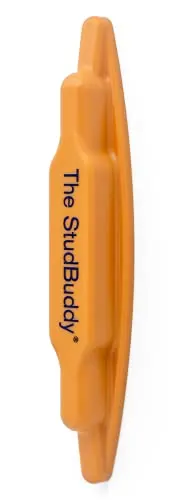
StudBuddy Magnetic Stud Finder
The $10 tool that embarrasses $60 electronics on plaster. It finds the actual fasteners holding your wall together, which is the most reliable stud signal there is. Multiple plaster-wall owners report it works where electronic scanners fail.
Not for: plaster on metal lath, which confuses every magnet.
Our pick
Franklin Sensors ProSensor M210
Verdict. The most reliable electronic stud finder for plaster walls in our research. Its 13-sensor array and 1.7-inch depth handle standard plaster far better than single-sensor models, and buyers consistently report accurate center-and-edge readings with no calibration fuss. It is the best first choice for plaster.
Not for: metal lath. Nothing electronic is reliable there.
Pros
- 13 sensors show full stud width, center and edges at once
- 1.7-inch depth reaches through standard plaster
- No calibration, press and slide
- Live wire warning adds drilling safety
- Bubble level and pencil caddy included
Cons
- Struggles with very thick plaster or metal lath
- Plastic housing feels less rugged than pro tools
- Batteries not included
- Sensors
- 13 sensors, up to 1.7 in. scan depth
- Wire detection
- live wire detection with center indicator
- Calibration
- none required
- Extras
- built-in bubble level and pencil caddy
- Power
- 2 AA batteries (not included)
- Price
- about $60
Budget pick
StudBuddy Magnetic Stud Finder
Verdict. The $10 tool that embarrasses $60 electronics on plaster. It finds the actual fasteners holding your wall together, which is the most reliable stud signal there is. Multiple plaster-wall owners report it works where electronic scanners fail.
Not for: plaster on metal lath, which confuses every magnet.
Pros
- Dead simple, no batteries, no calibration, no false beeps
- Finds real fasteners, not guesses
- Works on plaster where electronics fail
- Hangs on the wall so your hands stay free
- Costs less than a pizza
Cons
- Useless on metal lath (steel mesh overwhelms the magnets)
- Only finds fastener positions, not stud edges
- No wire or pipe detection
- Type
- rare-earth magnetic stud finder
- Power
- no batteries required
- Mounting
- hangs hands-free on the wall once it finds metal
- Origin
- made in the USA
- Price
- about $10
Also worth a look
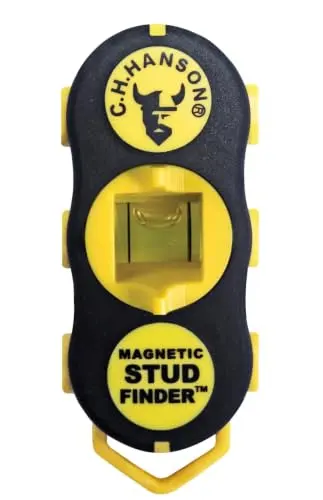
CH Hanson 3040 Magnetic Stud Finder
Verdict. A tougher, more refined take on the magnetic finder with a genuinely useful rotating level. If you like the StudBuddy concept but want a level built in and a more pocketable tool, this is the upgrade.
Not for: metal lath.
Pros
- Strong magnets in a compact body
- Built-in rotating level
- Simple, durable, battery-free
Cons
- Same metal-lath weakness as all magnets
- Finds fasteners only, not stud edges
- Type
- rare-earth magnetic stud finder
- Level
- rotating bubble level for horizontal and vertical
- Build
- compact, durable body
- Power
- no batteries required
- Price
- about $15
Also worth a look
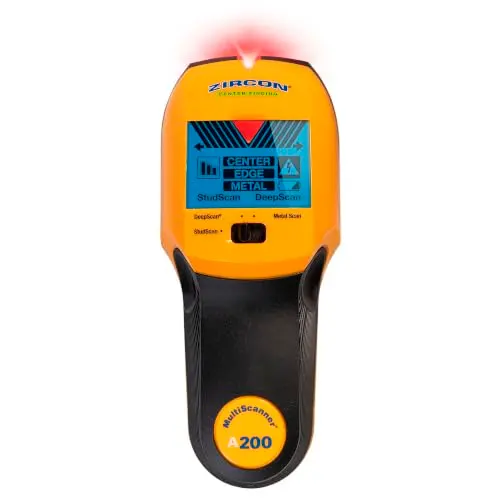
Zircon MultiScanner A200
Verdict. A solid multi-mode scanner for thinner plaster and mixed wall types, with the bonus of metal and live-wire detection in one pass. Great on drywall and thin plaster. A good pick if your home mixes wall types.
Not for: thick old plaster, where the 1.5-inch depth runs out.
Pros
- Three scan modes adapt to different walls
- Metal scan mode helps map what's behind old walls
- Live wire warning for safer drilling
- Clear LCD plus pointer for marking
Cons
- 1.5-inch depth falls short on thick plaster
- 9V battery adds running cost
- Calibration can be fussy on uneven plaster
- Modes
- StudScan, DeepScan, and Metal Scan
- Scan depth
- up to 1.5 in.
- Wire warning
- live AC wire detection
- Display
- LCD with SpotLite marking pointer
- Power
- 9V battery
- Price
- about $40
Also worth a look
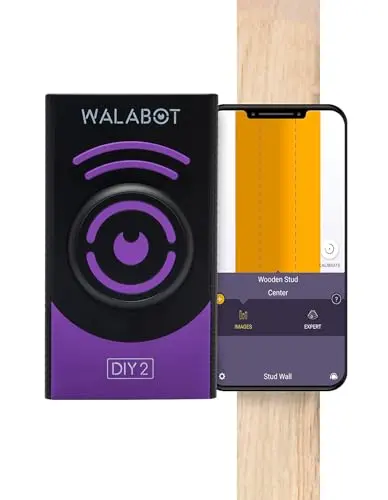
Walabot DIY 2
Not for plaster walls
Verdict. We include the Walabot as a warning, not a recommendation. An impressive tool for modern walls, but at $185 it is the most expensive way to learn it cannot see through your plaster.
Not for: plaster, lath, concrete, or tile. It is rated for drywall and plywood only.
Pros
- Visual imaging is genuinely impressive on drywall
- Deep 4-inch scan range on supported walls
Cons
- Not rated for plaster or lath, the whole point of this guide
- Most expensive pick by far
- Requires a compatible smartphone
- Type
- visual wall scanner via smartphone app
- Detects
- wood and metal studs, pipes, live and non-live wires
- Scan depth
- up to 4 in. on supported walls
- Compatibility
- iOS and Android
- Price
- about $185
How we picked
Clearline guides are research-based: we synthesize thousands of Amazon buyer reviews, independent test reports, and manufacturer specification sheets for each shortlisted model. We did not hands-on test these products. See our How we research page. For this guide we focused on one question: which stud finders actually find studs through plaster walls, including older plaster-and-lath construction?
Compare the picks
| Model | Best for | Display | Sensors | Wire detection | Calibration | Extras | Power | Price | Type | Mounting | Origin | Level | Build | Modes | Scan depth | Wire warning | Detects | Compatibility | Typical price |
|---|---|---|---|---|---|---|---|---|---|---|---|---|---|---|---|---|---|---|---|
| Franklin Sensors ProSensor M210 | Our pick | n/a | 13 sensors, up to 1.7 in. scan depth | live wire detection with center indicator | none required | built-in bubble level and pencil caddy | 2 AA batteries (not included) | about $60 | n/a | n/a | n/a | n/a | n/a | n/a | n/a | n/a | n/a | n/a | n/a |
| StudBuddy Magnetic Stud Finder | Budget pick | n/a | n/a | n/a | n/a | n/a | no batteries required | about $10 | rare-earth magnetic stud finder | hangs hands-free on the wall once it finds metal | made in the USA | n/a | n/a | n/a | n/a | n/a | n/a | n/a | n/a |
| CH Hanson 3040 Magnetic Stud Finder | Also worth a look | n/a | n/a | n/a | n/a | n/a | no batteries required | about $15 | rare-earth magnetic stud finder | n/a | n/a | rotating bubble level for horizontal and vertical | compact, durable body | n/a | n/a | n/a | n/a | n/a | n/a |
| Zircon MultiScanner A200 | Also worth a look | LCD with SpotLite marking pointer | n/a | n/a | n/a | n/a | 9V battery | about $40 | n/a | n/a | n/a | n/a | n/a | StudScan, DeepScan, and Metal Scan | up to 1.5 in. | live AC wire detection | n/a | n/a | n/a |
| Walabot DIY 2 | Not for plaster walls | n/a | n/a | n/a | n/a | n/a | n/a | about $185 | visual wall scanner via smartphone app | n/a | n/a | n/a | n/a | n/a | up to 4 in. on supported walls | n/a | wood and metal studs, pipes, live and non-live wires | iOS and Android | n/a |
Why plaster defeats most stud finders
Three things make plaster hostile to stud finders. First, thickness: a plaster coat is often 3/4 inch to over an inch deep, while basic electronic finders are tuned for 1/2-inch drywall. Second, density variation: plaster applied over wood lath creates an uneven surface of wood strips, gaps, and keys of plaster squeezed between them. Every density change looks like a possible stud to a cheap sensor. Third, metal lath: mid-century repairs and some ceilings use expanded steel mesh instead of wood strips, and that mesh blinds both electronic sensors and magnetic finders alike.
Electronic vs. magnetic: which approach for your walls?
Electronic deep-scan finders (like the Franklin M210) are the best all-round choice for plaster over wood lath. Their 1.5-1.7 inch range reaches the stud through a standard plaster coat, and multi-sensor models average out the noise from lath gaps. Magnetic finders (StudBuddy, CH Hanson) take a different approach: they ignore the plaster entirely and snap onto the nails or screws fastening the wall to the stud. On plaster-over-wood-lath this is extremely reliable, and at $10-15, cheap enough to own alongside an electronic model. If you have metal lath, neither approach works well; your options are a dedicated metal-scan mode to map the mesh, or careful pilot holes.
What to avoid
Wall imagers rated drywall-only (like the Walabot DIY 2): impressive tech, wrong walls.
Cheap single-sensor beepers. They false-positive constantly on dense, uneven plaster.
Any magnetic finder on metal lath. The steel mesh overwhelms the magnets.
How to use a magnetic finder on plaster
Start near an outlet or switch. Boxes are usually nailed to a stud, giving you a reference point.
Sweep the finder slowly in an S-pattern, pressing lightly so it glides on the plaster.
When it sticks, mark the spot. Sweep vertically to trace the fastener line up and down the stud.
Measure 16 inches sideways (the standard stud spacing) and sweep again to confirm the next stud.
If the magnet sticks weakly everywhere, you may have metal lath. Switch to an electronic finder with metal-scan mode.
Common questions
Will a regular stud finder work on plaster walls?
Basic models tuned for 1/2-inch drywall often give false or missed readings on plaster. Choose a deep-scan electronic model (1.5 inches or more) like the Franklin ProSensor M210, or go magnetic. A $10 magnetic finder that locates the actual fasteners is often more reliable on plaster than a cheap electronic one.
Can I use a magnetic stud finder on lath and plaster?
Yes, if the lath is wood, the magnets find the nails holding the lath to the studs, which many owners report works even where electronic scanners fail. No, if the lath is metal mesh: the steel overwhelms the magnets and they stick everywhere.
How do I know if my plaster has metal lath?
Clues include a home built or renovated after the 1940s, a magnetic finder that sticks weakly across large areas, or a hollow metallic sound when you tap. When in doubt, assume wood lath in pre-1940s homes and test a small area first.
What is the best stud finder for old plaster walls overall?
Our research points to a two-tool combo: the Franklin Sensors ProSensor M210 as the primary electronic finder, plus the $10 StudBuddy magnetic finder as backup. Together they cover plaster-over-wood-lath reliably for about $70 total.
Are expensive stud finders worth it for plaster walls?
Not necessarily. The $185 Walabot DIY 2 is excellent on drywall but explicitly not rated for plaster. Price does not buy plaster performance. Match the tool to your wall type, not the price tag.
Sources
This guide uses AI-assisted analysis of buyer reviews, manufacturer specifications, and public sources on Reddit, YouTube, and expert sites. A person reviews every guide before it is published. We do not test these tools hands-on. As an Amazon Associate we earn from qualifying purchases. Affiliate disclosure · How we research